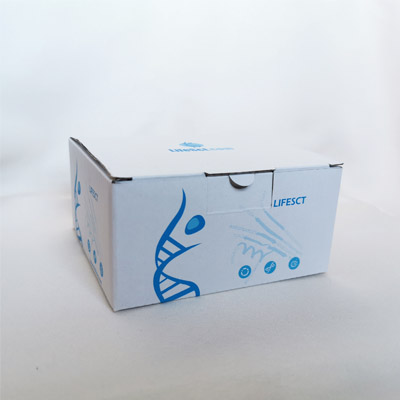
tissue homogenates, cell lysates, cell culture supernates or other biological fluids.
Experimental method:
Sandwich
Shelf life:
12 months
Gene ID:
21898
UniProt ID:
Q9QUK6
Component:
1. Pre-coated, ready to use 96-well strip plate 1
2. Plate sealer for 96 wells 2
3. Standard 2
4. Diluents buffer: 1×45 mL
5. Detection Reagent A: 1×120 μL
6. Detection Reagent B: 1×120 μL
7. TMB Substrate: 1×9 mL
8. Stop Solution: 1×6 mL
9. Wash Buffer (30× concentrate): 1×20 mL
Background
This gene belongs to the evolutionarily-conserved Toll-like receptor family, whose members are type-1 transmembrane proteins that are involved in innate immunity. Toll-like receptors are characterized by an extracellular leucine-rich repeat domain that functions in ligand recognition and an intracellular toll/interleukin-1 receptor-like domain that is crucial for signal transduction. The receptor encoded by this gene mediates the innate immune response to bacterial lipopolysaccharide, a major component of the outer membrane of Gram-negative bacteria, through synthesis of pro-inflammatory cytokines and chemokines. In addition, this protein can recognize other pathogens from Gram-negative and Gram-positive bacteria as well as viral components. Mice deficient in this gene display a number of immune response-related phenotypes including hyporesponsiveness to bacterial lipopolysaccharide and increased levels of respiratory syncytial virus compared to controls.