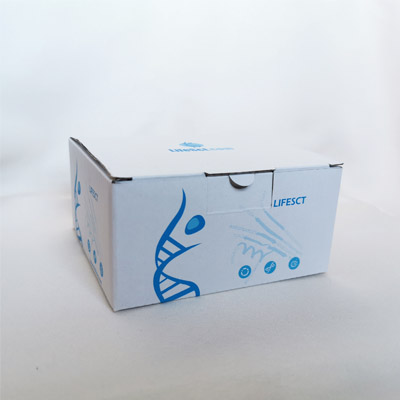
tissue homogenates, cell lysates, cell culture supernates or other biological fluids.
Experimental method:
Sandwich
Shelf life:
16 months
Gene ID:
4582
UniProt ID:
P15941
Components:
1. Pre-coated, ready to use 96-well strip plate 1
2. Plate sealer for 96 wells 2
3. Standard 2
4. Standard Diluent 1×10 mL
5. Detection Solution A 1×6 mL
6. Detection Solution B 1×6 mL
7. TMB Substrate 1×4.5 mL
8. Stop Solution: 1×3 mL
9. Wash Buffer (30× concentrate): 1×10 mL
Background
This gene encodes a member of the kallikrein subfamily of serine proteases. These enzymes have diverse physiological functions and many kallikrein genes are biomarkers for cancer. The encoded protein has chymotrypsin-like activity and plays a role in the proteolysis of intercellular cohesive structures that precedes desquamation, the shedding of the outermost layer of the epidermis. The encoded protein may play a role in cancer invasion and metastasis, and increased expression of this gene is associated with unfavorable prognosis and progression of several types of cancer. Polymorphisms in this gene may play a role in the development of atopic dermatitis. Alternatively spliced transcript variants encoding multiple isoforms have been observed for this gene, which is one of fifteen kallikrein subfamily members located in a gene cluster on chromosome 19.