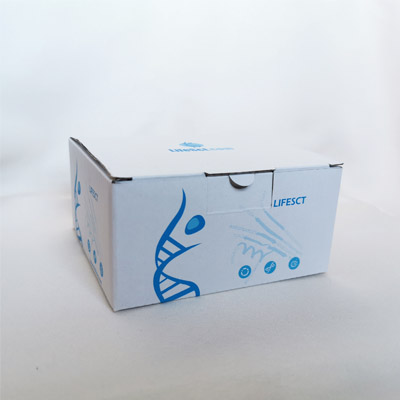
plasma, tissue homogenates, cell lysates, cell culture supernates or other biological fluids.
Experimental method:
Sandwich
Shelf life:
16 months
Gene ID:
5328
UniProt ID:
P00749
Components:
1. Pre-coated, ready to use 96-well strip plate 1
2. Plate sealer for 96 wells 2
3. Standard 2
4. Standard Diluent 1×10 mL
5. Detection Solution A 1×6 mL
6. Detection Solution B 1×6 mL
7. TMB Substrate 1×4.5 mL
8. Stop Solution: 1×3 mL
9. Wash Buffer (30× concentrate): 1×10 mL
Background
The gene PLAT encodes tissue-type plasminogen activator, a secreted serine protease that converts the proenzyme plasminogen to plasmin, a fibrinolytic enzyme. The encoded preproprotein is proteolytically processed by plasmin or trypsin to generate heavy and light chains. These chains associate via disulfide linkages to form the heterodimeric enzyme. This enzyme plays a role in cell migration and tissue remodeling. Increased enzymatic activity causes hyperfibrinolysis, which manifests as excessive bleeding, while decreased activity leads to hypofibrinolysis, which can result in thrombosis or embolism. Alternative splicing of this gene results in multiple transcript variants, at least one of which encodes an isoform that is proteolytically processed.